Strengthening acute care systems in low-resource settings
THE CHALLENGE
Urgent need for stronger acute care systems
In low- and middle-income countries, up to 50% of deaths and one-third of disabilities are addressable with effective acute care.
Too often, limited training means emergencies aren’t recognized early, initial care is delayed, and referrals come too late. Equipping frontline teams changes that—fast.
A NEW GLOBAL ALLIANCE
The Acute Care Action Network
After the 2023 World Health Assembly resolution on integrated emergency, critical and operative (ECO) care, the World Health Organization - supported by the Laerdal Foundation and the American Heart Association - launched the Acute Care Action Network (ACAN) that by now have more than 70 participant organizations.
WHO estimates ACAN can save millions of lives by bringing together top organizations dedicated to improving emergency, critical, and operative care services to scale up WHO's acute care tools.

THE OPPORTUNITY
Strengthening emergency care systems is one of the most powerful and cost-effective ways to save lives across all age groups. Evidence shows that basic emergency care interventions can significantly reduce mortality from trauma, sepsis, and other acute conditions when implemented at scale.
Emergency care is also a foundation of resilient health systems — essential for routine care, outbreaks, and humanitarian crises alike.
The Acute Care Action Network
A new network to strengthen emergency and acute care.

The Acute Care Action Network will bring proven interventions to scale - together. A key priority is to scale up the Basic Emergency Care program.
- Teri Reynolds, Unit Head, Clinical Services and Systems, WHO
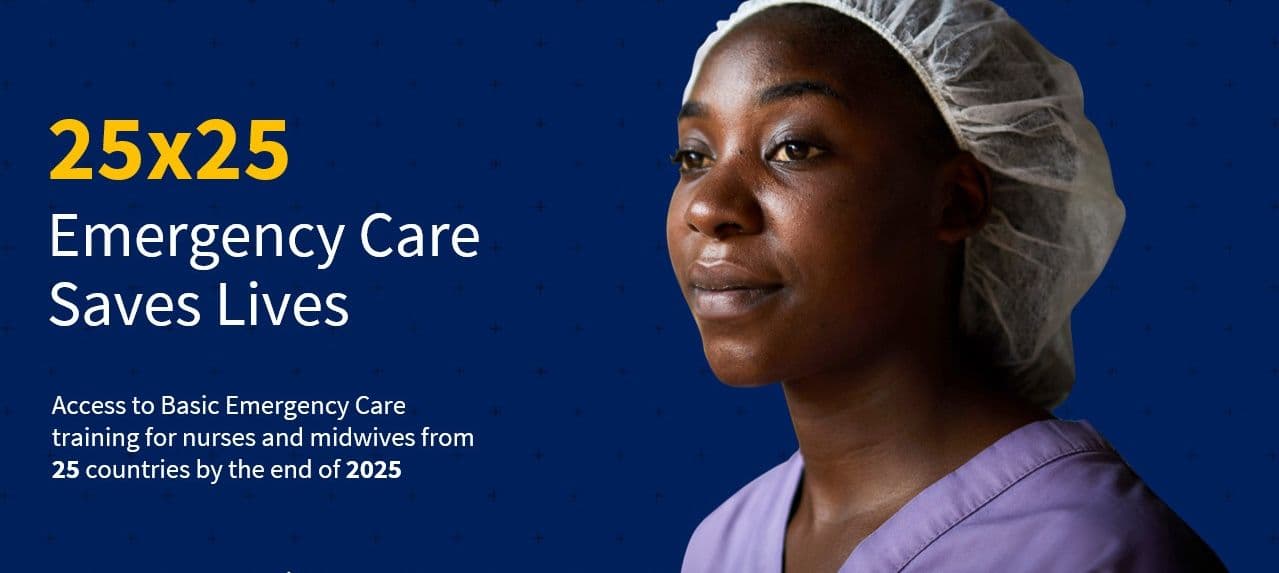
Scaling up Basic Emergency Care
In 2023, WHO launched the “25x25” campaign to introduce Basic Emergency Care in 25 countries by 2025.
The Basic Emergency Care program has already been shown to reduce mortality by injuries and sepsis by up to 50 % and has now been further improved into an even more scalable, cost-effective, and impactful program.
Launching the 25*25 campaign
Dr. Tedros Adhanom Ghebreyesus
Director-General, The World Health Organization
A paradigm shift
More scalable, sustainable training
To support WHO to scale the Basic Emergency Care program and achieve sustainable impact, we have worked with the WHO Academy to develop a condensed, interactive e-learning program, enabling the face-to-face part of the course to be focused on practical skills training and taken down from previously 5 to now 2 days – saving significant costs.
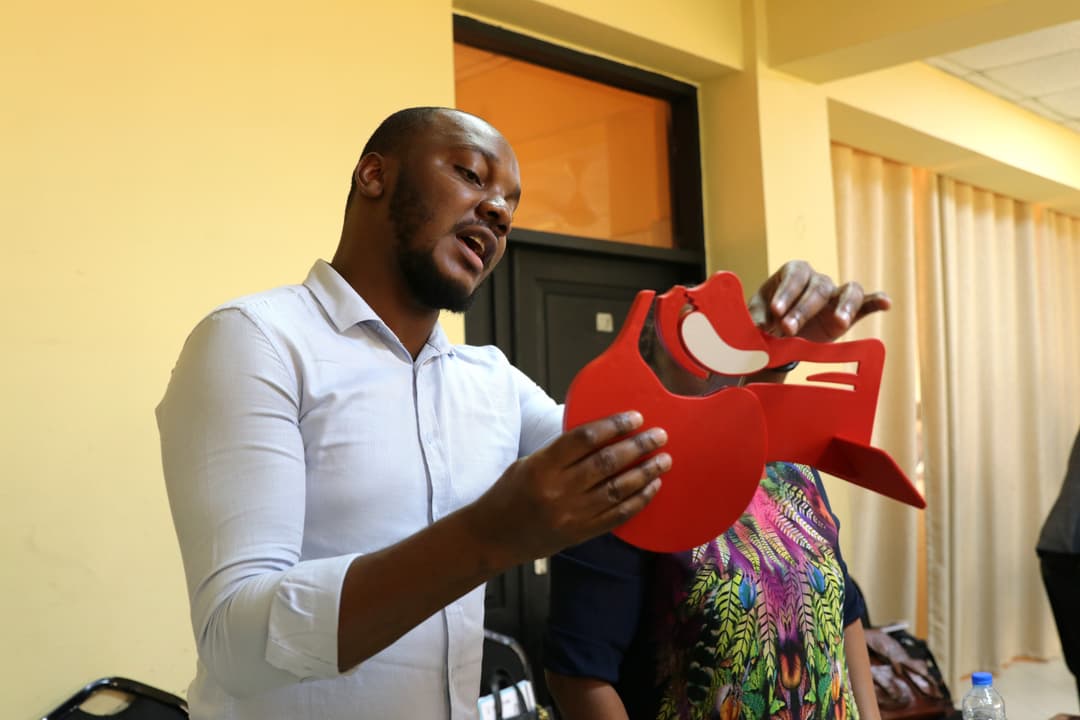
To enable practice anywhere, we have also developed a training kit - the Emergency Care Learning Lab. The kit is ultra-portable, weighing only about 9 kilos. It is also ultra-affordable, being distributed on a not-for-profit basis through Laerdal Global Health to low-and medium-income countries. Costs is estimated to come down about 90% compared to equipment used today, to the extent equipment is available at all.
The low cost also allows the individual hospitals to acquire their own training kit, enabling the important worksite refresher training.
The result? Scaling possible at half the cost, and twice the long-term impact.


We have seen a great impact of the Basic Emergency Care training so far. The new, hybrid version of the program will be a saviour to us, enabling us to reach much further and have an even bigger impact on helping save lives.
Raya Mussa, General Secretary in the Emergency Medical Association of Tanzania
Give a Lifeline
Help save 50,000 lives - every year.
The Basic Emergency Care program works - now it’s time to scale.
To help accelerate scale-up, Laerdal Global Health has committed US$12.5M to launch the Lifeline Fund together with WHO Foundation. We are inviting philanthropic foundations and other funders to join this co-funding consortium.
The goal? Train 50,000 frontline providers across 1,000 hospitals in five African countries — and help save 50,000 more lives each year.
And this is just the beginning. We believe this will lay the foundation to scale up across many more countries, saving millions of lives in the years ahead.

Global activities through the Acute Care Action Network
Watch how one of the Acute Care Action Network participant organizations is helping spread Basic Emergency Care training for the Pacific Islands.